
CASE - How to start with circular practices in your organisation?
Can a Small Change Really Make a Difference?
Sustainability can easily feel overwhelming for companies.
Circular business models, ESG requirements, carbon footprints, supply chains, new regulations… The challenge can quickly become so big that organisations either try to develop an ambitious sustainability strategy—or postpone action altogether.
But transformation does not always have to start with a big strategy.
Sometimes, it starts with one very concrete question:

What is one thing we are currently throwing away that could become valuable to someone else?
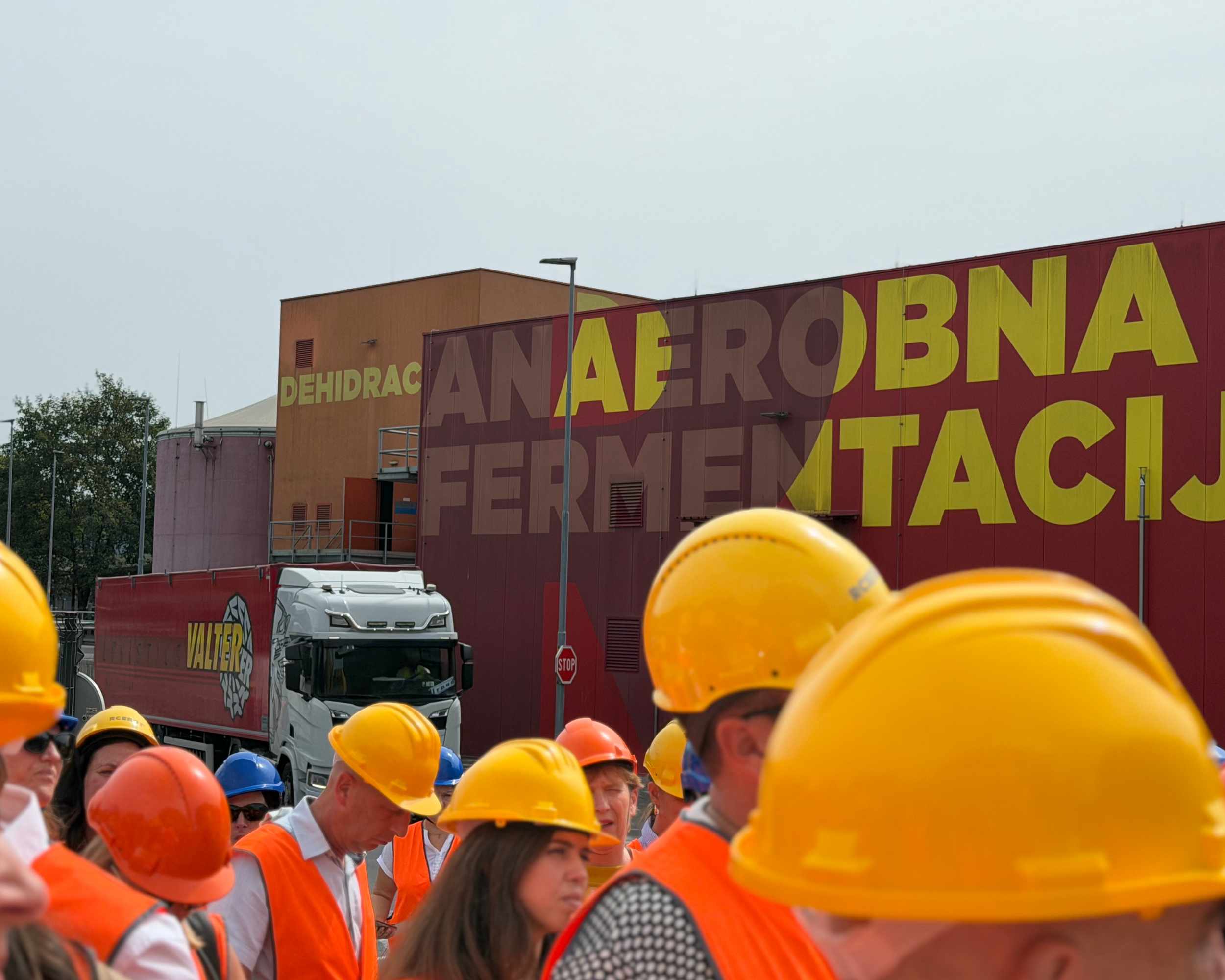
Recently, our director Meta Pezdir presented one such example at the Surpluses, Leftovers and Waste as a Source of New Business Value event at RCERO Ljubljana. It came from a circular economy pilot project we developed together with the Slovenian IT company Telprom.
The solution itself was surprisingly simple.
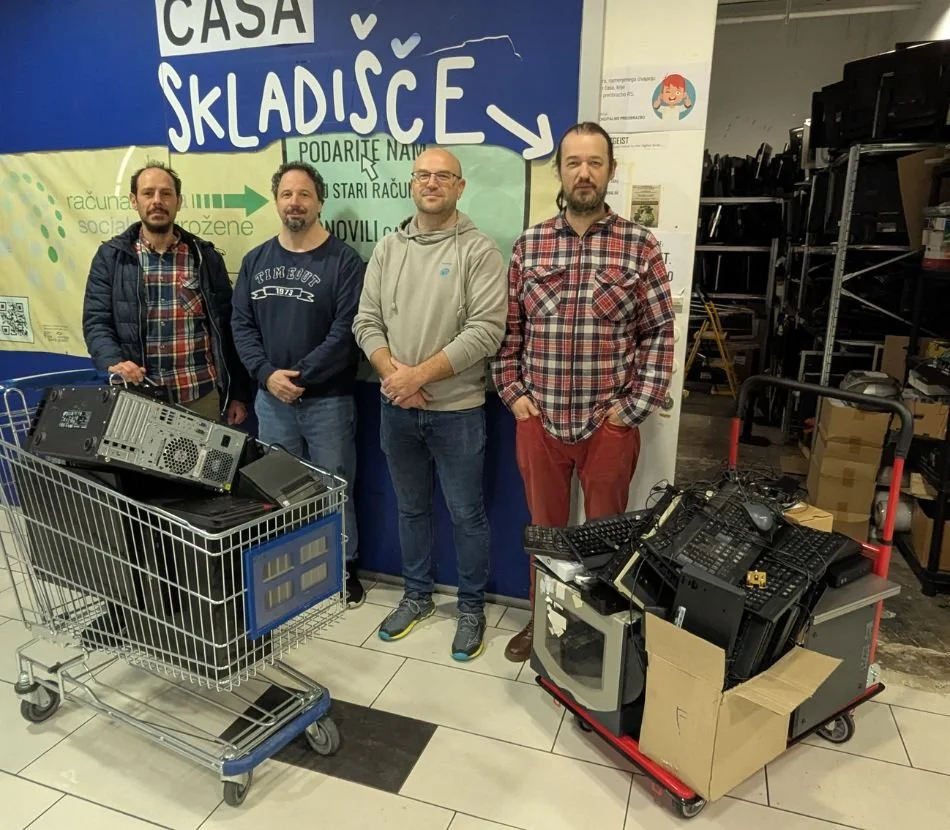
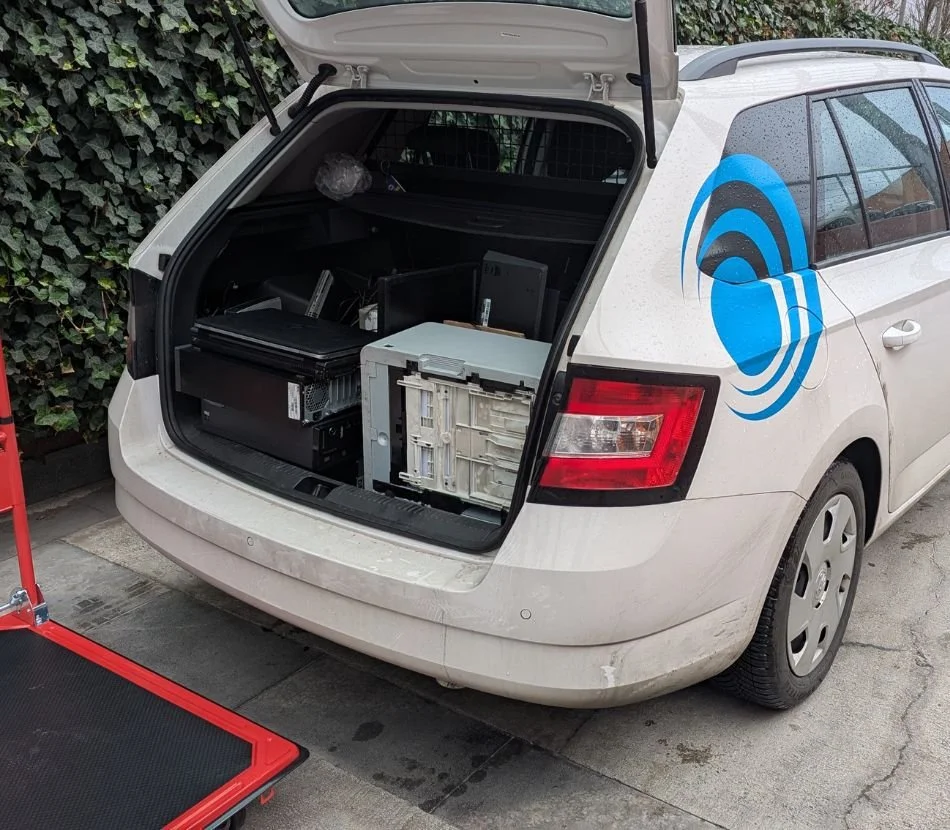
Instead of disposing of decommissioned IT equipment as waste, Telprom started transferring it to Duh časa, a Slovenian organisation that gives usable equipment to people who need it and ensures that non-functional equipment is appropriately dismantled and processed.
Working printers, computers or other equipment can therefore continue their useful life. Equipment that can no longer be used can be broken down into components rather than simply becoming waste.
It sounds logical.
And yet, before the pilot, it was not part of the company's everyday practice.
That is precisely why I think this small example contains a useful lesson about organisational change.
Small experiments can be more powerful than big ambitions
When we talk about sustainability and circularity, we often start with the desired end state: becoming circular, reducing emissions, creating sustainable products or transforming the business model.
But organisations rarely change in one big move.
People need to understand a new practice, try it, see whether it works and gradually integrate it into existing processes. A small pilot makes this possible without requiring the whole organisation to change at once.
In the Telprom case, we did not start by asking:
“How can we transform the entire company into a circular business?”
Instead, we identified a tangible challenge—electronic waste—and developed a small intervention that could be tested relatively quickly.
Once the first equipment donation was completed successfully, the experiment no longer felt like an experiment. It simply made sense to continue.
The pilot became a practice.
A 5-step process for introducing small circular changes
Looking back, our process can be translated into five steps that other organisations can use when experimenting with circular practices.
1. Understand where you are
Before generating solutions, understand the current situation.
At Telprom, we used the Green Star certification process by CER – Sustainable Business Network to review the company's sustainability practices.
The purpose of an assessment should not only be to receive a score or certificate. Its real value is in making existing practices visible.
2. Expose your organisation to new ideas
Good solutions rarely emerge from sitting in the same meeting room with the same people.
We deliberately participated in sustainability events, business delegations and programmes such as Transformator Slovenija. These experiences helped us see how other organisations were approaching similar challenges.
3. Bring in knowledge you do not have internally
Small and medium-sized companies rarely have sustainability specialists sitting in every department—and they do not necessarily need to.
External expertise can help a company structure the problem and move from broad sustainability ambitions to something actionable.
Through financial support from Silicon Europe, we participated in four practical workshops facilitated by sustainability expert Ram Dušić Hren. We mapped stakeholders, explored processes and identified key sustainability challenges.
One of them was electronic waste.
Instead of producing another long list of recommendations, we selected this challenge and turned it into a pilot.
4. Test before you scale
Once you identify an opportunity, resist the temptation to design the perfect solution. Run the smallest meaningful experiment.
For us, that meant finding an organisation that could responsibly reuse or process discarded IT equipment and completing the first donation.
After the first donation, the answer was clear: yes.
The pilot became part of regular practice.
5. Communicate the new practice
A circular initiative creates more value when employees, clients and partners understand why it exists.
Communication can also reinforce the behaviour internally. What was initially “a sustainability experiment” gradually becomes part of how the organisation operates.
This is also an area where our Telprom pilot still has room to grow.
And that is perfectly normal.
Organisational change is rarely finished when the pilot ends. A successful experiment creates the starting point for the next iteration.
To Conclude ... Small Change Matters
One thing I learned from this project is that sustainability does not always require organisations to begin with radical transformation.
Especially in companies where circular business models are still relatively unfamiliar, starting small can actually be an advantage.
A manageable experiment reduces resistance. Employees do not feel that everything they know is suddenly being replaced. Management can observe the results before committing significant resources. Clients and partners have time to understand the change.
And the organisation develops something particularly valuable: the capability to change.
The first experiment might involve electronic equipment. The next could involve procurement, business gifts, packaging, mobility, energy use or the design of a service itself.
One small practice will not make a company circular.
But it can change the direction in which the company is moving.
And sometimes, that is exactly where transformation begins.
A question for your organisation:
What is one resource, process or habit in your company that you currently take for granted—but could redesign as a small experiment?
Don't start by asking how to transform everything.
Find one meaningful problem. Design a small test. Learn from it. And if it works, make it the new normal.
